In 2004, musician Luke Toms signed one of the year’s most lucrative recording contracts. A cult demo tape and a rapturous gig at The Bedford in Balham caused Toms to become the reluctant target of a major-label bidding war. Toms eventually caved to Dan Keeling, a man best known for securing Coldplay for Parlophone – and it would be a somewhat irregular deal given his modest profile and the music business’s propensity for risk aversion.
Toms, a songwriter at heart, sought only a publishing deal – such were his insecurities about his voice and his abilities to perform. Keeling, who had just moved to Island/Universal, was determined to make his mark and Toms would be his calling card. To that end, Keeling offered Toms a large non-refundable cash advance, a two-album deal, and a contract loaded with caveats favouring the artist. One such contractual stipulation guaranteed that Island Records would match the production budget of Luke’s second album with that of his first. However, by agreeing to such a generous contract Keeling secured Toms’ services not only as a songwriter and but also as a recording artist.
The only resulting album would be what became to be known as: ‘The Lost Album’ – and if you haven’t heard of it don’t worry, few have. Produced by super-producer Marius de Vries (David Bowie, Bjork, U2) and with production costs well in excess of £100,000 – The Lost Album was destined to never make it to record stores. But to understand exactly how such an expensive record could be shelved is to understand how the songs were written in the first place.
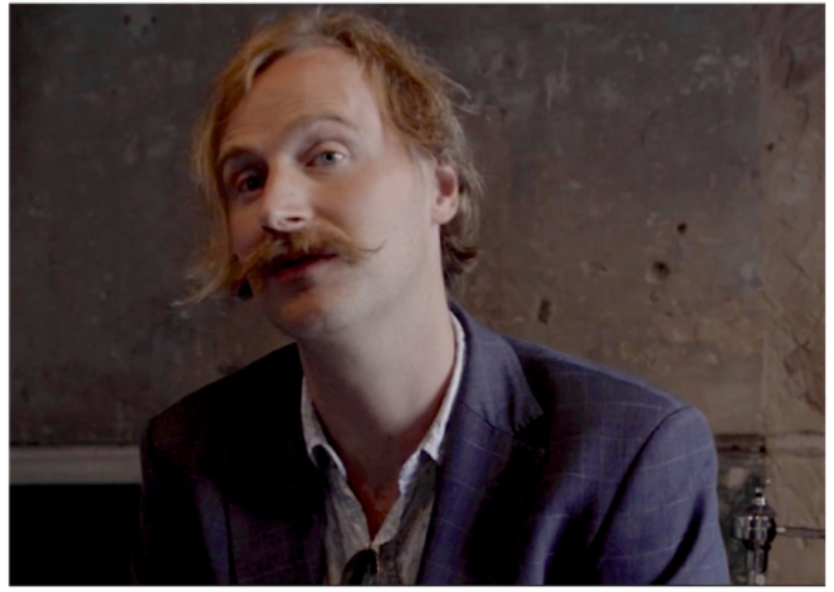
My first encounter with Toms took place in 2018 at The Big Red – a sticky North London rocker bar devoid of any real grit or rock and roll authenticity. It was the tail-end of a friend’s birthday and the group had dwindled to just the two of us. He was an eccentric peacock of a man, well postured, wild-eyed and adorned with an extravagant walrus moustache. He articulated himself in a woefully old-fashioned manner that was distinctly out of place at the bar.
Our conversation soon took a life of its own, with Toms recounting anecdotes about his long and varied musical career. However, it was when he told me about ‘The Lost Album’ that my attention was truly captured. In a matter of weeks Luke had gone from west country obscurity to being the most sort after unsigned artist in London: “It was the right place, the right time, the right music,” he explained. His sound was the perfect for the zeitgeist of the day; flamboyant, brash and heavily 70’s influenced. He felt his songs had the heady pop sensibility necessary to top the charts alongside The Zutons, Guillemots and his label mate Mika (with whom he would support on tour).
I left The Big Red profoundly suspicious of Luke’s story – his account simply didn’t chime with my limited understanding of the record industry. I struggled to believe that Island Records wouldn’t release such an expensive recording, or that they would have agreed on such a generous deal in the first place. Was this just a tall tale? Was Luke Toms simply the Holloway Road’s answer to Walter Mitty?
Curiosity not only kills cats but it also performs Google searches – so I went online to see what I could find. I discovered a website designed by Luke himself, as-well as a smattering articles by self proclaimed online music journalists … until … there it was: ‘Peace By My Self’. The lead single from The Lost Album on eBay.
Three days later my 7” vinyl arrived, copyrighted to Island Records in 2007, and indeed produced by Marius de Vries. The track itself was a beautiful and sensitive piano-led ballad with lush orchestration and a sound that echoed a young Elton John.
Toms had given me his number, so I bit the bullet and gave him a call. I explained how I worked in documentaries and how I was looking for new, unique and interesting stories. I asked if he would consider filming an interview – only to find out why Dan Keeling had conceded to so many contractual caveats in his Island Records contract – Luke drives hard bargains, he had no aspirations of a career revival and felt he had more to lose than gain. So, in order to persuade him I guaranteed him that he would have creative control over the final cut and a say on how any material would be distributed.
I asked Toms to send me anything that he felt would help in preparation for the interview. He sent some images and links, and to my surprise, an academic paper he’d written, entitled: ‘A View On Suicide Bereavement and the Therapeutic Nature of Songwriting’. Central to the paper was an autobiographical element which detailed Toms’ own struggle with his sisters’ suicide and how he’d used songwriting as a means of coping.
This presented a dilemma – music therapy played a major role in the creation of his songs, but how would he react to questions about the death of his sister death? On one hand, he’d been particular when agreeing to participate in the interview, on the other, it was Toms himself who had sent me the paper.
We met at The Jamboree in East London – it transpired to be the ideal location to conduct interview the interview; a decadent speakeasy with instruments hanging from the ceiling, a stage, a bar and still-drying impressionist paintings perched in the corners. Whilst I assembled the camera kit Toms located an upright piano. Much to his delight he found it was in tune. He pulled up a stool and started to play. It was magnificent.
Many of the songs on his website had demonstrated competent song-writing and musical craftsmanship, but this? This was the stuff bidding wars were made of. He didn’t so much play as perform. His fingers danced effortlessly across the keys while his voice reached for the heights of Freddy Mercury – warbling lyrics that evoked an early Roxy Music. I was reluctant to make him stop, but we had much to discuss and our time at the venue was limited.
A natural in front of the camera, he looked at ease and answered questions in a clear, concise manner. “Could your debut be the most expensive debut never released?” I asked. “Quite possibly could have been,” replied Toms. “We spent a lot of Universal’s money, well over £100,000 on my debut record, and it was never released.” He relished questions about his influences and lit up when talking about the songs themselves. “What made your debut record so expensive?” I asked. “I think it was our ambitions. The record industry at that time…the orchestra probably blew a lot of the money. It was just shy of thirty strings.”
But ultimately it wasn’t just the project’s costs or ambitions that would prove problematic, but the artist himself. He openly expressed regret at his idiosyncratic behaviour during the recording process and attributes it, in part, to excessive alcoholism. He told me about an argument with the label’s accounts department when he tried to claim booze as a living expense, proclaiming, “Have you not heard my songs?” It was one of many scenes played out by a young man working in an industry which he despised.
I asked him about ‘Peace by Myself’ and his eyes rolled: “It’s the most depressing song on the album. The sentiment in it is ultimately hopeless.”
I could tell it was a painful subject.
“They put it out and it just bombed. I remember Jonathan Ross going ‘God this is depressing’ live on radio – and that really lost the steam.”
I steered the conversation back to life before his move to London. He told me how he made his demo in rural Cornwall: “I recorded it on a shoestring, begged, borrowed and stole. I built a little studio in my mum’s house, turfed her out of her bedroom because the drums sounded best in there. Sang in the airing cupboard. Horns section, well horn, in the kitchen.”
As endearing as his story was, I wanted to address the elephant in the room – so I panicked and asked two questions in quick succession: “April 6th, 2001. What happened and how did it turn into self-administered therapy?” He looked instantly flushed.
“Well basically, my sister died. My sister took her own life. Which is funny to say out loud because it’s only been the last two years I’ve been able to say that without breaking down.”
He told me how he’d been studying music therapy and how he had worked through a lot of the most difficult things in his life through song. He explained: “I wrote a lot of songs about guilt. A lot of songs about hate. Songs about the people I believed were responsible.”
His sister died at the age of 27 when Luke was only 19.
“We were very close, me and her… My body could not actually contend with what had happened. Couldn’t absorb it. And I kind of started writing more, I’d written a bit before, but I started going full-on into writing, really just trying to sort it out.”
Turning to my question about therapy, Toms said: “To answer your question, from a therapy point of view, it’s to do with acceptance. So you can write a song about it and it can be the most horrendous song or the most damaging song and you put it there.” He paused, then added, “Then years later you accept what is in it.”
“Personally I have this really flimsy theory, which is that one can get a self-perceived sense of authenticity. And I think that’s derived from how we culturally see artists… and when something really horrendous happens to you, you’re like ‘I’m legitimate’ … I can actually do this!” He went on to say, “I think it gave me a subject matter and I think it gave me freedom in a sense to go: my pain is great therefore what I’m saying is valid.”
I ask if the record company was aware, “I mean that could have been easy. I could have gone out and said ‘this is my story’ and made a soppy ass record. As it was I made a lot of money from some very sad songs and some songs about my sister.”
Luke Toms and Island Records parted ways by mutual agreement almost a year and a half after the release of the single. It was Toms’ contract which stipulated that the same budget should be allocated to recoding the second album which had, no doubt, left Island Records treading water – keeping Toms in a holding pattern.
It may have been Toms’ idiosyncratic behaviour or his alcoholism that scuppered the album’s release. Or, it could have been a mishandled launch by the label, or even the end product. At any rate, the musical landscape was unrecognisable since he originally signed in 2004. Mika’s second album had flopped, The Zutons and Guillemots were playing markedly smaller venues, and all bets were hedged on Nu Rave and a new wave of synth-led pop acts. Pianists and lyricists simply were simply no longer invited to the party.
While the story of Luke Toms could be viewed as a cautionary tale, he was ultimately the hero of his own adventure – achieve everything he wished for. Namely, collecting the cheque and shunning the limelight. Most importantly, he found a way to work through his issues. And whilst Luke may have found authenticity as a songwriter, his songs, ultimately, may have proved too authentic for the record business.
 Lewis Craggs